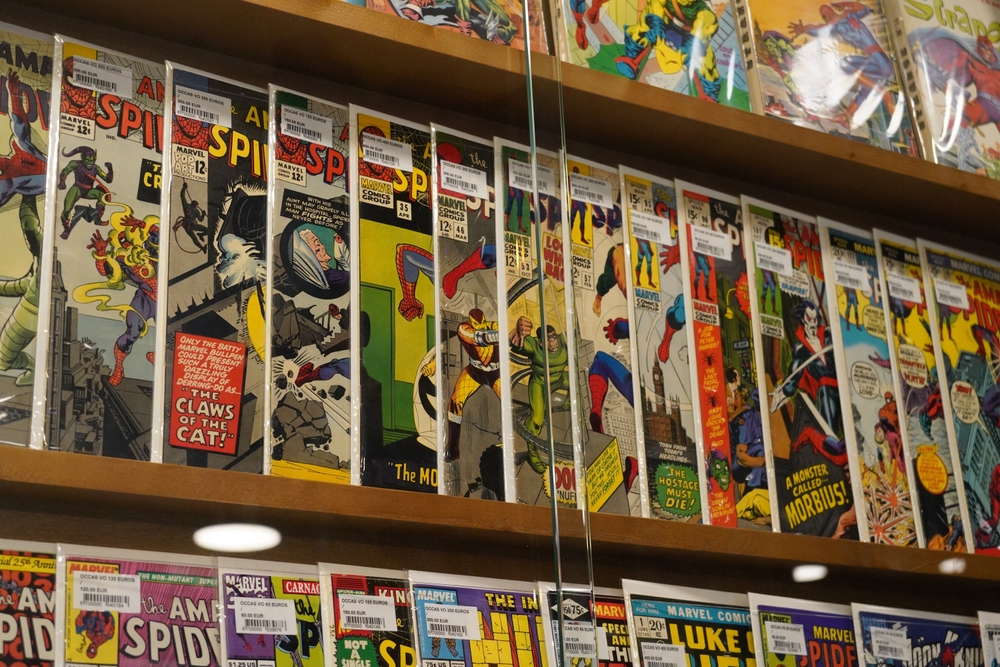
Comic books have gone from ten-cent newsstand reads to six-figure auction items in just a few decades. A single copy of Action Comics No. 1, the 1938 debut of Superman, has sold for over three million dollars. Meanwhile, a stack of comics from the 1990s sitting in someone’s garage might be worth little more than the cardboard box they are stored in.
So what separates a treasure from a throwaway? The answer involves a mix of history, condition, scarcity, and cultural weight. Understanding these factors can help collectors make smarter decisions, whether they are hunting for their first key issue or managing a collection worth thousands.
Rarity and Print Run Size
The foundation of comic book value is simple supply and demand. When fewer copies of a book exist, collectors compete harder to own one, and prices climb accordingly. Golden Age comics from the 1930s and 1940s were printed on cheap, acidic paper that deteriorated quickly. Many were thrown away, used in paper drives during World War II, or simply lost to time. As a result, surviving copies in any readable condition are genuinely scarce.
Print run size matters enormously. A comic with a circulation of two million copies is inherently easier to find than one printed in a regional test market with a run of fifty thousand. Some books had low print runs not because they were special, but because they were new titles that had not yet found an audience. If that series went on to become iconic, those early low-print issues became valuable by accident.
Variants and limited editions add another layer. Publishers have long produced incentive covers, retailer exclusives, and convention-only printings in deliberately small quantities. These can appreciate quickly, though not all variants hold their value. The key is whether collectors actually want the variant or whether it was produced in such high volume that scarcity never had a chance to develop.
Condition and Professional Grading
Condition is arguably the single biggest driver of price differences between copies of the same issue. Two copies of Amazing Fantasy No. 15, the first appearance of Spider-Man, can vary in value by tens of thousands of dollars based on condition alone. Collectors use a numerical grading scale from 0.5 to 10.0, where a 9.8 represents a nearly perfect copy with minimal handling wear, sharp corners, and no color fading.
Professional grading services have transformed the hobby. Companies like the Certified Guaranty Company, commonly known as CGC, evaluate comics, assign them a numeric grade, and seal them in a tamper-evident plastic case called a slab. A graded and slabbed comic removes the guesswork from buying and selling because the grade is certified by an independent third party. Slabbed copies consistently sell for more than raw, ungraded copies of the same issue.
The condition factors that graders examine include spine stress marks, color breaks, page quality, staple integrity, and the presence of any writing or stamps. Even small defects knock a book down significantly on the scale. A copy graded at 9.0 instead of 9.8 can represent a dramatic price difference on high-demand keys. This is why serious collectors invest in proper storage: Mylar bags, acid-free backing boards, and climate-controlled environments help preserve value over the long term.
First Appearances and Key Issues
Not all comics carry equal cultural weight. The hobby places enormous value on key issues, a term that broadly refers to comics containing significant story events. The most prized category is first appearances. The debut of a beloved character, particularly one who later became famous through film or television adaptations, can send the value of that issue through the roof.
The Marvel Cinematic Universe has had a visible and measurable impact on back-issue prices. When a character is announced for a film or Disney+ series, collectors rush to buy their first appearance, driving prices up rapidly. This happened with Ms. Marvel, Moon Knight, Shang-Chi, and dozens of other characters. Savvy collectors sometimes position themselves ahead of announcements, buying first appearances of obscure characters who seem likely to appear in future projects.
Beyond character debuts, key issues include first team appearances, first costumes, origin issues, death issues for major characters, and landmark story arcs. The first issue of a long-running series also holds special status, as does the final issue when it contains meaningful narrative closure. Any comic that represents a genuine turning point in the medium, or in pop culture more broadly, earns the key label and the premium price that comes with it.
Age and Historical Significance
The era in which a comic was published shapes its collectability in fundamental ways. Collectors and historians divide the medium into distinct periods: the Golden Age running roughly from 1938 to 1956, the Silver Age from 1956 to 1970, the Bronze Age from 1970 to 1985, the Copper Age from 1985 to 1993, and the Modern Age covering everything since. Golden Age and Silver Age books are the most sought after, both for their historical importance and their genuine scarcity.
Golden Age comics introduced the superhero genre to the world. They carry the weight of being primary artifacts of American popular culture during the Great Depression and World War II. Superhero comics of that era were propaganda tools, entertainment, and social mirrors all at once. Beyond superheroes, the Golden Age produced crime comics, romance comics, and horror comics that were later targeted by congressional censorship hearings. Books that survived that turbulent era in good condition are irreplaceable pieces of history.
Silver Age comics benefit from being the era most collectors grew up hearing about. They introduced beloved versions of iconic heroes, including the Barry Allen Flash, Hal Jordan Green Lantern, and the entire original Marvel universe built by Stan Lee and Jack Kirby. The Silver Age represents innovation, optimism, and a creative explosion that shaped the medium for generations. Collectors who want to own a piece of that creative period are willing to pay substantial premiums.
Creator Significance and Cultural Impact
The people who made a comic matter just as much as the character inside it. Issues penciled, inked, or written by legendary creators carry a premium beyond what the content alone would justify. A Jack Kirby penciled cover, a Neal Adams interior, or a Frank Miller script elevates any issue it touches. Collectors treat the work of foundational creators the same way art collectors treat the work of famous painters: the hand behind it matters.
Cultural impact is harder to quantify but just as real. A comic that inspired a generation of artists, launched a new genre, or sparked a major controversy occupies a unique place in the market. Watchmen, first published as a 12-issue limited series in 1986 and 1987, changed the medium permanently. Original issues in high grade carry significant value not just because of scarcity but because of what those issues meant to the history of storytelling.
Creator-signed copies add yet another dimension. A signature from a living legend like Neal Adams before his passing, or from currently active creators with massive followings, can add meaningful value to a book, especially when authenticated through established programs.
Conclusion
Comic book value comes from the intersection of rarity, condition, story significance, historical age, and cultural resonance. No single factor dominates in isolation. A rare book in poor condition will underperform; a common book in perfect condition may not appreciate at all. The collectors who understand all five forces together are the ones who build collections that grow in value while also reflecting genuine love for the medium.
Need Collectibles in Evansville, IN?
The Book Broker is your locally owned and operated used book store. We offer a variety of products to fit everyone in the family! From books and video games to sports cards and vinyl records! We also offer TCG tournaments every week! Contact us today and escape your reality!